
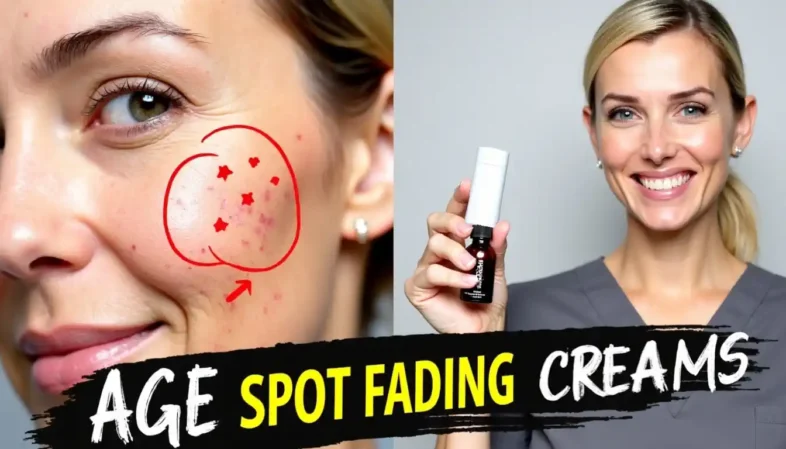
Have you ever looked at the back of your hands or in the mirror and thought, where did that spot come from?
If you have, you're in good company. As we get older, our skin tells the story of our lives, and sometimes that includes age spots. They're also known as “liver spots,” and they often show up on our face, hands, or any area that's seen a lot of sun over the years.
These little dark spots appear when our body produces too much melanin in one place, which is its natural way of protecting the skin from sun damage. While they are harmless, I know they can make us feel a bit self-conscious.
The good news is that there are many gentle, natural ways to help them fade, giving you a more even and glowing skin tone. I'm going to walk you through a few of my favorite home remedies first. We'll also look at a suggested “age spot fading cream” product a little later on.
A Quick Word on Safety First
Before we jump into these recipes, I always tell my readers to do a patch test. Your skin is unique, and what works for one person might be irritating for another.
Simply apply a small amount of the mixture to a discreet area, like your inner wrist, and wait 24 hours to see how your skin reacts. It's a simple step that can save you a lot of trouble!
Lemon Juice
You've likely heard about using lemon juice to get natural highlights in your hair, and that same lightening power can be used on age spots. The magic ingredient here is citric acid, which acts as a natural bleaching agent to gently fade pigmentation.
For this remedy, I recommend using the juice from a fresh lemon for the best results. Here is a simple way to use it:
- Squeeze fresh lemon juice onto a cotton ball.
- Apply it directly to the age spots each day.
- Let the juice dry completely on your skin.
- Gently rinse the area with warm water.
Now, this is very important. Lemon juice is quite acidic and can make your skin very sensitive to the sun, a condition known as phytophotodermatitis. Always use a good sunscreen during the day when using this treatment.
Because the acid will dry out your skin, it's a great idea to follow up each treatment with a quality moisturizer. Look for one containing jojoba or coconut oil to replenish your skin's moisture.
Apple Cider Vinegar and Red Onion
This next combination might sound a little unusual, but it's a classic folk remedy that many people find helpful. The power here comes from two key ingredients working together.
Red onion contains sulfur compounds that can help fade dark spots. A 2011 study published in the journal *Natural Product Research* found that an onion extract called allium cepa could lighten skin hyperpigmentation. Apple cider vinegar contains acetic acid, which can help exfoliate the skin and improve its overall appearance.
How to Prepare the Mixture
To try this method, you'll need to juice one red onion. You can do this with a juicer or by blending it and straining the pulp. Then, mix equal parts of the fresh onion juice and apple cider vinegar.
Apply this blend to your age spots and let it dry completely. Once it's dry, rinse it off with warm water. Just like with the lemon juice treatment, you should always apply a rich moisturizer afterward to keep your skin from drying out.
Castor Oil
If you're looking for a simple, single-ingredient solution, castor oil might be one of the most effective age spot remedies to try. While it may not make spots disappear completely, it is excellent for skin health and can make them less visible.
Castor oil is rich in ricinoleic acid, a fatty acid that is fantastic for conditioning the skin. When your skin is well-hydrated and healthy, its texture improves, which can help reduce the uneven look that age spots create.
Many users on forums like Reddit's r/SkincareAddiction report that consistent use of castor oil helped improve their overall skin texture and tone. For the best results, dab a small amount of cold-pressed castor oil onto the spots twice a day. It may take a few months of consistent use, so patience is key here!
Aloe Vera Juice
Finally, we have what I like to call nature's perfect skin soother, the Aloe Vera plant. It's famous for healing sunburns, but its benefits go much deeper.
Aloe Vera contains a compound called aloesin. Research has shown that aloesin can inhibit tyrosinase activity, which is an enzyme needed for melanin production. A study published in *Clinical and Experimental Dermatology* in 2002 found that aloesin was effective at reducing hyperpigmentation.
The best way to use this is to get the gel straight from the plant.
- Cut off a small piece of an Aloe Vera leaf.
- Slice it open to reveal the clear gel inside.
- Wipe this fresh gel directly onto the age spots.
- There's no need to rinse it off; just let your skin absorb all the goodness.
For the best effect, try to do this several times throughout the day.
My Final Thoughts
Age spots are just our skin's way of showing it has protected us from the sun over the years. These home remedies are wonderful because they work with your body to either lighten the discoloration or provide deep nutrition to help the skin heal.
However, they all require commitment and repeated applications. Many of them are also acidic, which can cause dryness, a problem many of us already face as our skin matures.
For those of us with busy lives or sensitive skin, an age spot fading cream formulated to be gentle yet effective might be a much wiser choice. These creams often contain ingredients like niacinamide or vitamin C that are proven to help with pigmentation.
If you are a US reader you can Click Here to learn more about the product we researched. For my UK readers, please Click Here.