Do you ever look in the mirror and wonder where that new brown spot on your skin came from? It can feel like they just show up overnight.
I know the feeling well. I've seen them on my own cheeks, the backs of my hands, and my shoulders, basically anywhere the sun has had years to “visit.”
Sometimes these spots are harmless, but they can still be so frustrating. They can make your skin look uneven and older, and they can be a real pain to cover with makeup. In my years of focusing on natural skincare, I've learned that not all brown spots are the same, and knowing what you're dealing with is the first step to getting clearer skin.
So, let's walk through this together. I'm going to share my practical, step-by-step approach to figuring out what causes these spots and what actually helps fade them safely, without all the hype and expensive promises from big skincare brands.
Step 1: Figure Out What Kind of Brown Spot You Have (and Check for Red Flags)
Before I ever try to treat a brown spot, I do a quick check to understand what it is. Using the wrong treatment can be a waste of time and money, and some spots should never be treated at home without a doctor's opinion.
Common Types of Brown Spots on Skin
Most spots fall into one of these categories:
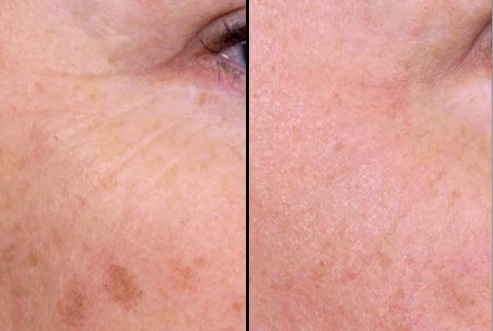
- Sunspots or Age Spots (Solar Lentigines): These are flat, tan to dark brown patches that pop up on areas that get the most sun, like your face, chest, and hands. They are a direct result of years of sun exposure.
- Post-Inflammatory Hyperpigmentation (PIH): These are the brown marks left behind after your skin gets irritated. Think of the spots that linger after acne, a bug bite, or a burn. Picking at pimples is a very common cause of PIH.
- Melasma: This shows up as symmetrical brown or grayish-brown patches, often on the cheeks, upper lip, or forehead. It's frequently tied to hormonal changes from pregnancy or birth control and gets worse with sun and heat.
- Freckles: These are usually genetic. They are small spots that get darker with sun exposure in the summer and lighten up in the winter.
When to See a Doctor (Don't Skip This)
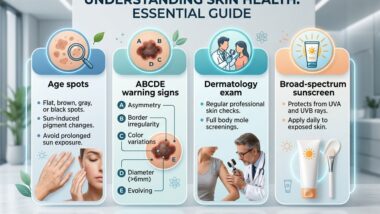
Most brown spots are harmless, but you should always be safe. I use the “ABCDE” rule, recommended by The Skin Cancer Foundation and the American Academy of Dermatology, to check any suspicious mole or spot.
Finding melanoma, a dangerous form of skin cancer, at an early stage is crucial. According to The Skin Cancer Foundation, the 5-year survival rate for melanoma that is detected early is 99%.
Here's what to look for:
- A for Asymmetry: One half of the spot doesn't match the other.
- B for Border: The edges are irregular, scalloped, or poorly defined.
- C for Color: The spot has multiple colors, like shades of brown, tan, black, or even red, white, or blue.
- D for Diameter: The spot is larger than a pencil eraser (about 6 mm), though some can be smaller.
- E for Evolving: The spot changes in size, shape, or color over time.
If you see any of these signs, or if a spot is new, itchy, or bleeding, please get it checked by a professional. This guide is for common, harmless brown spots, so get clarity first and then you can treat with confidence.
Step 2: Stop New Brown Spots From Forming With Sun Protection
If you asked me for the single most important tip for getting rid of brown spots, it wouldn't be a fancy cream. It would be this: protect your skin from the sun every single day.
Without consistent sun protection, any brightening products you use will work much slower, and new spots will just keep showing up. It's the foundation of any good routine.
My Simple Daily Sun Protection Routine
- Use Broad-Spectrum SPF 30 or Higher: The American Academy of Dermatology recommends at least SPF 30, which blocks about 97% of the sun's UVB rays. “Broad-spectrum” means it protects you from both UVA (aging) and UVB (burning) rays.
- Apply Enough of It: Most people only apply 25-50% of the sunscreen they actually need. A good guideline is the “two-finger rule.” Squeeze two lines of sunscreen along your index and middle fingers, and apply that to your face and neck. A 2002 study is often credited with popularizing this measurement to ensure you're getting close to the recommended amount.
- Reapply Often: You should reapply every two hours when you're outdoors, and more often if you've been swimming or sweating.
- Add Extra Protection: Don't forget sunglasses, a wide-brimmed hat, and seeking shade when the sun is at its peak.
A Pro-Tip for Stubborn Pigmentation
If you have melasma or marks from old breakouts, visible light from the sun can make them worse. A great solution I've found is using a tinted mineral sunscreen. These sunscreens contain iron oxides, which help block that visible light. Many dermatologists recommend tinted formulas like the La Roche-Posay Anthelios Mineral Tinted SPF 50 or EltaMD UV Clear Tinted Sunscreen for this very reason.
Step 3: Use Targeted Ingredients to Fade Existing Brown Spots
Once you have your daily sunscreen habit down, you can add ingredients that are proven to help fade the spots you already have. These ingredients work by slowing down pigment production or by helping your skin shed old, discolored cells faster. In my experience, combining a couple of these is often more effective than using just one.
At-Home Ingredients That Really Work
Here are some of the ingredients I've seen make the biggest difference:
| Ingredient | What It's Best For |
|---|---|
| Vitamin C | A fantastic antioxidant for fading sun-related discoloration. Research shows concentrations between 10-20% are the most effective. I like to use it in the morning under my sunscreen. |
| Niacinamide | Great for post-acne marks and gentle on sensitive skin. Studies have found that concentrations of 4-5% can significantly reduce hyperpigmentation by helping to stop the transfer of pigment to skin cells. |
| Retinoids | These speed up cell turnover to help fade sunspots and post-acne marks. You can start with over-the-counter options like retinol or adapalene (found in Differin Gel). |
| Azelaic Acid | An excellent choice for marks left by acne and redness. It's often well-tolerated and can be helpful for those dealing with melasma. |
| Tranexamic Acid | This is becoming more popular for treating stubborn discoloration, especially melasma, when used as a topical cream or serum. |
A Simple Routine to Get You Started
In the Morning:
- Wash with a gentle cleanser.
- Apply a Vitamin C or Niacinamide serum.
- Add moisturizer if your skin needs it.
- Finish with a broad-spectrum sunscreen (this is non-negotiable!).
At Night:
- Wash your face with a cleanser.
- Apply a retinoid. It's best to start just 2-3 nights a week to let your skin adjust.
- Follow up with a good moisturizer.
How Long Does It Take to See Results?
Patience is key here. Fading brown spots is a marathon, not a sprint.
- Post-Acne Marks: You can often see improvement in 8-16 weeks if you are consistent.
- Sunspots: These can take 3-6 months to fade with topical products alone.
- Melasma: This often requires ongoing care, as it can come back easily without strict sun and heat protection.
Step 4: Add Gentle Exfoliation and Repair Your Skin Barrier
Exfoliation can help speed up the fading process by helping your skin shed the old, pigmented cells on the surface. But you have to be careful, because too much exfoliation can irritate your skin and actually make pigmentation worse.
My Favorite Exfoliation Methods
I almost always recommend chemical exfoliants over harsh physical scrubs.
- Alpha-Hydroxy Acids (AHAs): Ingredients like glycolic acid and lactic acid are great for sunspots and improving your skin's overall glow and texture.
- Beta-Hydroxy Acids (BHAs): Salicylic acid is the most common BHA. It's best for oily or acne-prone skin because it can get into pores to prevent the clogs that lead to new spots.
- Poly-Hydroxy Acids (PHAs): These are a gentler option if you have sensitive skin.
For most people, exfoliating just 1 to 3 times per week is more than enough, especially if you are also using a retinoid.
Why a Healthy Skin Barrier Matters
A strong, healthy skin barrier is less prone to irritation. When your skin is calm, it can tolerate the active ingredients needed to fade spots much better. I always look for moisturizers with ingredients that support the skin barrier.
Your skin's outer layer is made up of about 50% ceramides, which act like the “glue” that holds your skin cells together to keep moisture in and irritants out. As we age, our ceramide levels drop, which can weaken the skin barrier.
Look for products with ceramides, glycerin, or panthenol to keep your barrier happy. A popular and affordable option like CeraVe Moisturizing Cream contains multiple types of ceramides to help repair and maintain the skin's protective barrier.
Step 5: When to Consider Professional Treatments for Brown Spots on Skin
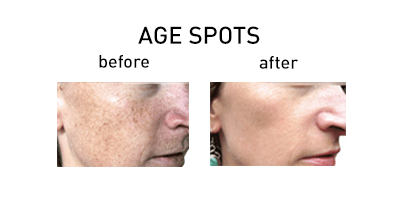
If you've been consistent with your at-home routine for a few months and some spots just won't fade, or if you simply want faster results, professional treatments can be a great option. The right choice depends on the type of spot you have and your skin tone.
Common In-Office Options
It's so important to see a qualified professional who can recommend the right treatment for you. Here are some of the most common options:
- Chemical Peels: These use acids to remove the outer layers of skin. A light “lunchtime” peel might cost between $100 and $300, while a medium-depth peel for more significant pigmentation can range from $300 to $1,500.
- Laser and Light Treatments: Intense Pulsed Light (IPL) is a popular option for sunspots. The average cost for an IPL photofacial is typically between $300 and $600 per session. For deeper pigmentation or different skin tones, a provider might suggest a laser like the Fraxel Dual laser, which uses specific wavelengths (1550 nm and 1927 nm) to target pigment at various depths.
- Microneedling: This treatment creates tiny micro-injuries in the skin to stimulate collagen and can help improve overall tone and texture, especially for post-acne marks.
What to Ask Before You Book a Treatment
I always suggest asking a few key questions during your consultation:
- “What kind of brown spot do I have?”
- “What are the risks of this treatment for my skin tone?”
- “How many sessions will I likely need and what is the downtime?”
- “What should my at-home skincare routine look like before and after the treatment?”
Remember, even with the best professional treatment, daily sunscreen and a good maintenance routine at home are what will keep your skin clear in the long run.
Pro Tips to Get Better, Faster Results
- Take Progress Photos: Spots can fade so slowly that you might not notice the change day-to-day. Taking a photo in the same lighting once a month can help you see your real progress.
- Treat the Whole Area: While it can be tempting to just spot-treat one mark, you'll often get a more even and natural-looking result if you treat the entire area, like your full face or the backs of your hands.
- Be Mindful of Heat with Melasma: If you have melasma, be aware that high heat from things like hot yoga, saunas, or even sitting too close to a stove can make it worse for some people.
- Introduce New Products Slowly: If you start using a vitamin C serum, a retinoid, and an exfoliating acid all at once, you're likely going to irritate your skin. Start one new active ingredient at a time and give your skin a week or two to adjust.
- Don't Forget Your Hands and Chest: These areas often show signs of sun damage even earlier than the face. Make sure you're applying sunscreen there every day!
FAQ
1) Are brown spots always age spots?
No, not at all. While sunspots are very common as we get older, brown spots can also be marks left from acne, a hormonal condition called melasma, or just simple freckles. The right approach really depends on the cause.
2) What's the fastest way to get rid of brown spots on skin?
The quickest results usually come from combining daily, consistent sunscreen use with professional treatments. For sunspots, something like an IPL photofacial can show results much faster than creams alone.
3) Do brown spots go away on their own?
Some marks from acne can fade over several months, especially if you protect them from the sun. But sunspots and melasma typically don't go away on their own and require consistent protection and targeted ingredients to fade.
4) Can I use retinol and exfoliating acids at the same time?
You can, but it's best to be careful. I would recommend alternating them on different nights to avoid irritation. For example, use a retinoid one night and an exfoliating acid the next. If your skin gets red or starts stinging, take a break from the actives for a few days.
5) What's the best ingredient for sensitive skin with brown spots?
I often recommend azelaic acid and niacinamide for sensitive skin. They are generally well-tolerated and can be very effective for discoloration, especially when you pair them with a gentle moisturizer and daily sunscreen.
Summary: My Practical Plan to Fade Brown Spots
Dealing with brown spots, whether they come from sun damage, old breakouts, or hormones, doesn't have to be complicated. My go-to approach is simple and effective.
First, try to identify what kind of spot you're dealing with. Then, commit to using a broad-spectrum sunscreen every single day, because this is the most important step.
After that, you can slowly add in a few proven brightening ingredients like vitamin C, a retinoid, or niacinamide. Always be gentle with exfoliation to avoid causing more irritation.
If your spots are stubborn, you can look into professional treatments with a trusted provider. An age spot reducer can be very effective when you have the right routine to back it up.
If you're shopping for a cream or a targeted dark spot serum, start with one that contains ingredients that are right for your skin's sensitivity. Then, give it at least 8 to 12 weeks of consistent use to see a real difference. The key is patience and consistency, and you can achieve clearer, more even-toned skin.
A Final Thought on Clearer Skin
How well any age spot reducer works really depends on how much sun exposure you've had over the years. If you're over 40, you might notice these brown spots appearing just a month or so after even a mild sunburn.
They are similar to freckles, but can show up on anyone. The best approach is a combination of protection and treatment. A good routine uses an effective age spot reducer at night while also focusing on ingredients that gently fade the brown spots, like extracts from the nut grass root which can help inhibit melanin production.
http://naturalskincare-remedies.com/caus…
[Published on: Dec 4, 2014. Rewritten May 2026.]