
You know how dark-spot shopping gets confusing fast: one serum promises rapid correction, while another centres on vitamin C and brighter-looking skin. The key distinction in this Murad Dark Spot Corrector versus Obagi Dark Spot Corrector comparison is that Murad Rapid Dark Spot Correcting Serum has a published four-week clinical study with visible improvement reported from day 7, while Obagi Professional-C Serum 20% is primarily a high-strength antioxidant vitamin C serum.
If speed is your main goal, that difference matters more than the marketing language.
Below, I compare the ingredients, routine, realistic timeline, irritation risks and value, so you can choose the right dark spot corrector for post-acne marks, sun spots or uneven skin tone.
Key Takeaways

- Murad is the faster pick on published evidence. Its Rapid Dark Spot Correcting Serum showed improvement in the look of dark spots in 7 days in a four-week study of 35 participants across Fitzpatrick skin types 2 to 6.
- Obagi Professional-C Serum 20% is a vitamin C serum, not a direct equivalent treatment. It uses 20% L-ascorbic acid to brighten skin tone and support antioxidant protection.
- Murad takes a multi-active approach. Tranexamic acid, glycolic acid and patented resorcinol technology target uneven tone from several angles.
- Obagi may suit a simpler morning routine. Its lightweight serum goes on after cleansing and before moisturiser and sunscreen.
- Sunscreen decides whether either serum can deliver. For hyperpigmentation, a tinted broad-spectrum SPF 30 or higher with iron oxides offers useful protection against visible light, which can worsen dark spots.
Key Ingredients Comparison: Murad Dark Spot Corrector vs Obagi
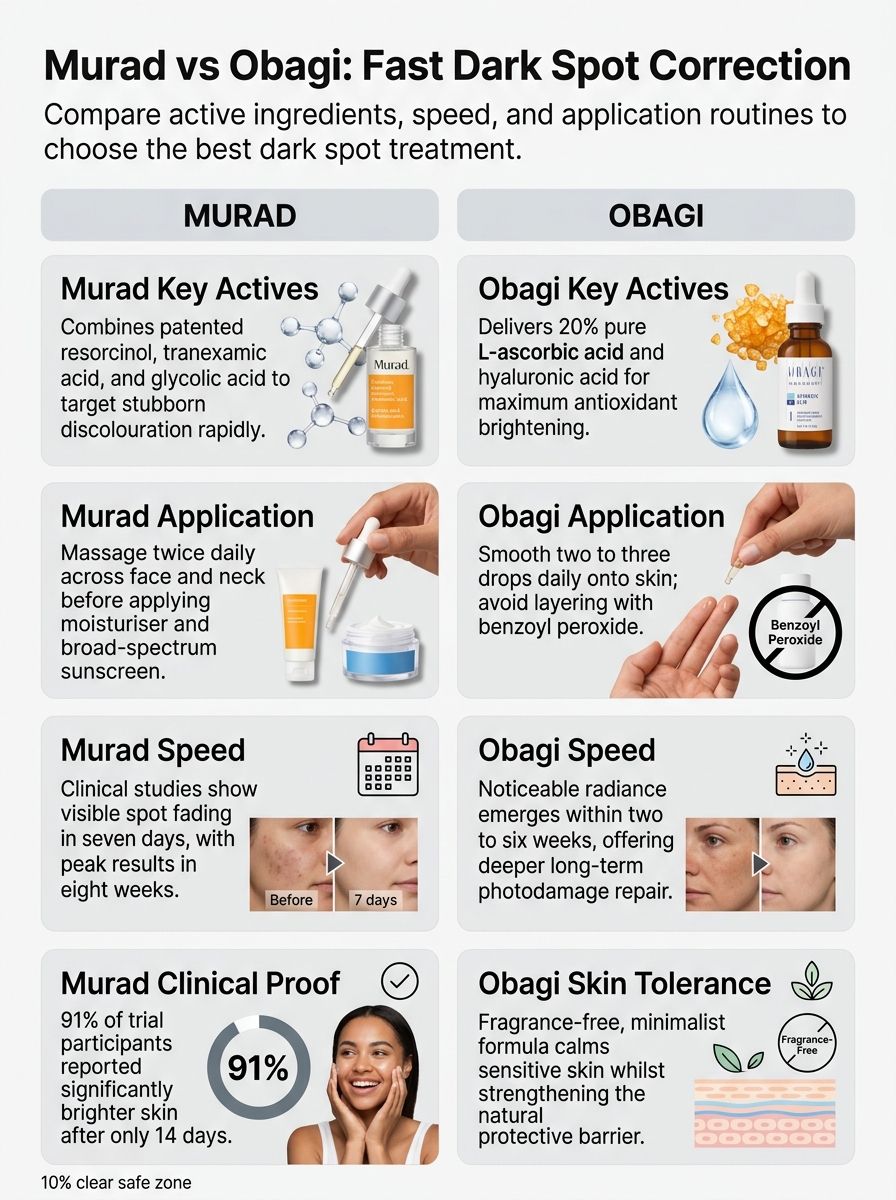
Murad and Obagi address dark spots differently. Murad Rapid Dark Spot Correcting Serum combines pigment-focused ingredients with glycolic acid, while Obagi Professional-C Serum 20% relies on concentrated L-ascorbic acid, the pure form of vitamin C.
That makes Murad the more targeted option for someone who wants to fade established hyperpigmentation. Obagi makes more sense if you want daily antioxidant support alongside a brighter, more even-looking complexion.
| Feature | Murad Rapid Dark Spot Correcting Serum | Obagi Professional-C Serum 20% |
|---|---|---|
| Primary brightening approach | Tranexamic acid, glycolic acid and patented resorcinol technology | 20% L-ascorbic acid and ascorbyl glucoside |
| Best fit | Visible dark spots, post-acne marks and uneven skin tone | Dullness, antioxidant support, fine lines and uneven tone |
| Published speed claim | Improvement in the look of dark spots from 7 days | No equivalent short-term dark-spot study listed for the serum |
| How often to use | Morning and night | Morning |
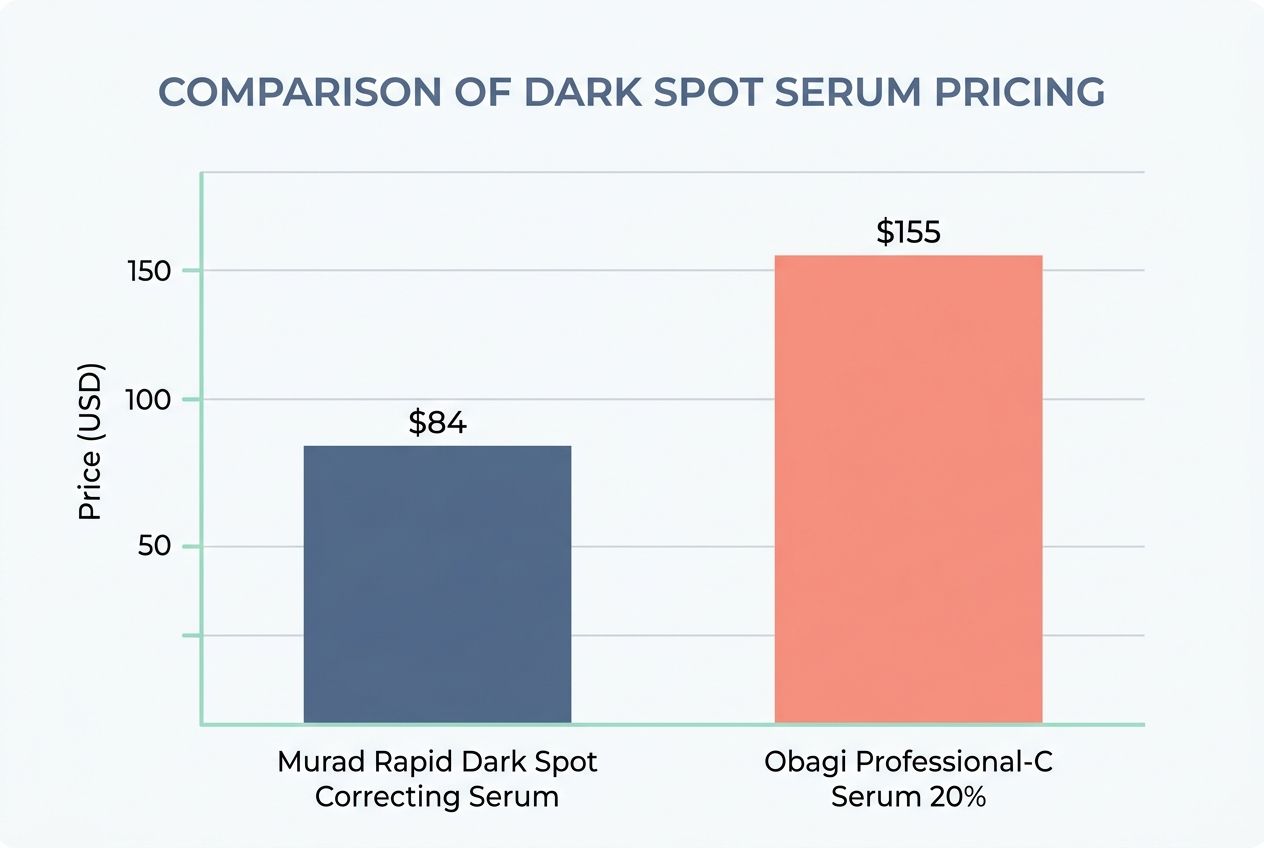
| Current listed 1 oz price | $84 | $155 |
Active ingredients in Murad
Murad Rapid Dark Spot Correcting Serum uses tranexamic acid, glycolic acid and patented resorcinol technology. Tranexamic acid is a pigment-modulating ingredient, while glycolic acid is an alpha hydroxy acid that loosens dead surface cells so skin can look smoother and more radiant.
The formula is designed for dark spots, post-acne discolouration and uneven skin tone, rather than general brightness alone. Murad states that its patented resorcinol technology helps reduce the intensity of visible dark spots and uneven tone.
- Tranexamic acid: supports a more even-looking skin tone and is especially useful for stubborn-looking hyperpigmentation.
- Glycolic acid: improves surface texture, but it can sting if you already use exfoliating acids, retinol or prescription acne treatment.
- Patented resorcinol technology: gives the formula an extra pigment-focused pathway beyond simple exfoliation.
- Hexapeptide-2: supports the serum's anti-aging focus by helping skin look smoother over time.
The formula is free from parabens, sulphates, phthalates, gluten and animal-derived ingredients. It does contain fragrance components, including citrus peel oil and limonene, so patch testing is particularly sensible if your skin reacts to fragranced skincare.
Murad's advantage is not one hero ingredient. It is the combination of pigment support, exfoliation and a twice-daily routine built specifically for visible dark spots.
Active ingredients in Obagi
Obagi Professional-C Serum 20% uses 20% L-ascorbic acid, plus ascorbyl glucoside and sodium hyaluronate. L-ascorbic acid works as an antioxidant and can help brighten the appearance of uneven skin tone while supporting collagen production.
Obagi lists the serum for normal, oily and combination skin. Its official ingredient list also includes alcohol and fragrance, so it is not fragrance-free or alcohol-free, despite claims you may see on retailer pages.
A 2024 review of over-the-counter hyperpigmentation treatments noted that topical vitamin C can help with pigmentation, but burning, stinging and scaling become more common above 20% concentrations. Start carefully if your skin barrier is compromised, or if you use retinol, glycolic acid or benzoyl peroxide.
- L-ascorbic acid: the main vitamin C active, chosen for brightening and antioxidant defence.
- Ascorbyl glucoside: a vitamin C derivative that supports the formula's brightening role.
- Sodium hyaluronate: a form of hyaluronic acid that helps the serum feel less drying on the skin.
- Alcohol and fragrance: can be fine for resilient skin, but they are practical reasons to patch test first.
Application Methods
Your routine can make a bigger difference than adding extra dark spot correctors. Apply each product to clean, dry skin, then protect the work with sunscreen every morning.
Do not start a new vitamin C serum, retinol and glycolic acid product all in the same week. If irritation causes inflammation, it can make post-acne marks and melasma harder to manage.
How to use Murad Dark Spot Corrector
Murad recommends applying Rapid Dark Spot Correcting Serum morning and night. Use it over your face, neck and chest, rather than applying a heavy blob to one individual mark.
- Cleanse with a gentle wash, such as Essential-C™ Cleanser, then pat your skin dry.
- Apply one to two pumps of Murad Dark Spot Serum evenly across the face, neck and chest.
- Avoid the eyes, lips and irritated or broken skin.
- Follow with a plain moisturiser if your skin feels dry or tight.
- In the morning, finish with broad-spectrum sunscreen of SPF 30 or higher.
Murad's four-week study used a morning-and-night regimen. That is why occasional use is unlikely to match the brand's day-7 claim, particularly for stubborn sun spots and post-inflammatory hyperpigmentation.
If you use retinol, start by placing retinol on alternate evenings or use Murad in the morning only for the first week. This gives you a clear read on whether glycolic acid is causing dryness, tingling or flaking.
How to use Obagi Dark Spot Corrector
Obagi Professional-C Serum 20% works best as a morning antioxidant step. Obagi directs users to apply five to seven drops after cleansing and toning, before moisturiser and SPF.
- Cleanse gently and pat skin dry.
- Apply five to seven drops across the face, neck and chest.
- Allow the serum to settle, then apply moisturiser if needed.
- Finish with broad-spectrum sunscreen before makeup or outdoor exposure.
- Store the bottle tightly closed in a cool, dark place and use it within three to six months after opening.
Obagi notes that some users may feel slight tingling, which should lessen with continued use. Stop using it and speak with a dermatologist if the sensation is severe, persistent or paired with redness and peeling.
Keep benzoyl peroxide and Obagi Professional-C Serum 20% in separate routines if you notice irritation. A simple approach is vitamin C in the morning and acne treatment at night.
Speed of Results
Murad works faster on the evidence available. Murad has a product-specific clinical study showing visible improvement in the look of dark spots from 7 days, while Obagi's Professional-C Serum 20% does not publish a matching day-by-day dark-spot result for this product.
That does not mean Obagi cannot improve skin tone. It means you should treat it as a steady vitamin C serum, rather than expect a guaranteed one-week spot-fading result.
Expected timeline for Murad
Murad's four-week clinical study included 35 participants with Fitzpatrick skin types 2 to 6. The study used expert grading, instrumental measurements and participant self-assessments.
In Murad's published results, participants saw an improvement in the look of dark spots in 7 days. By day 14, 91% reported brighter-looking skin, 94% reported smoother skin and 89% reported a more radiant glow.
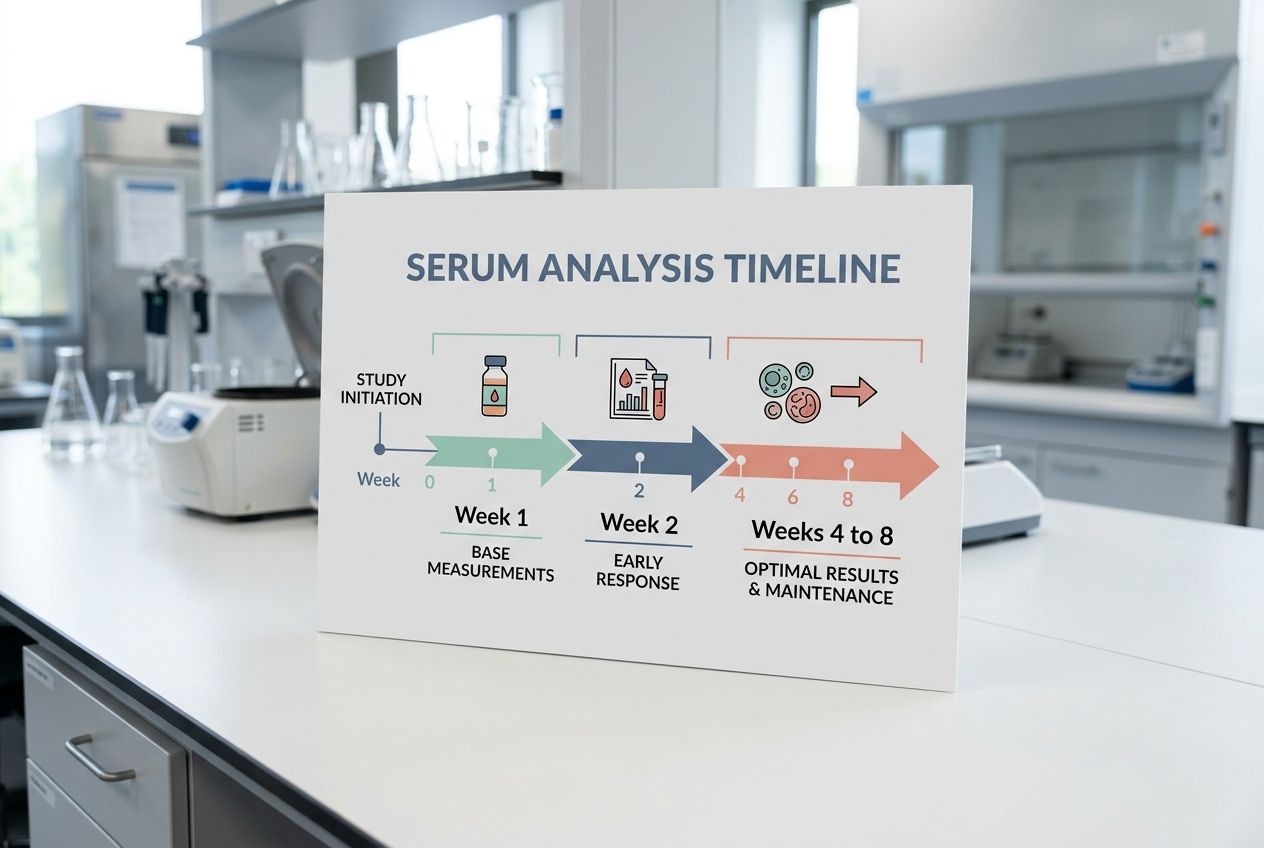
| Time using Murad | What to look for | What to do |
|---|---|---|
| Week 1 | Early change in radiance or the look of fresh post-acne marks | Keep the routine gentle and take a baseline photo in the same light. |
| Week 2 | Brighter-looking skin and smoother texture | Continue twice daily only if your skin remains comfortable. |
| Weeks 4 to 8 | More meaningful fading of stubborn marks | Review progress, then see a dermatologist for deep or worsening patches. |
Murad states that deeper pigmentation, sun spots and stubborn post-acne marks can need four to eight weeks or longer. That is a more realistic timeframe for marks that have been present for months.
Expected timeline for Obagi
Obagi Professional-C Serum 20% can make skin look fresher and more luminous, but vitamin C does not remove existing dark spots overnight. A 2023 systematic review found support for topical vitamin C in melasma and photoaging, yet the studies varied widely in formula, strength and treatment length.
Give Obagi at least eight to 12 weeks of consistent morning use before judging its effect on hyperpigmentation. Keep the bottle out of direct light and heat, because L-ascorbic acid is less stable than many vitamin C derivatives.

Choose Obagi for gradual brightening and daily antioxidant support. Choose Murad if your priority is a dark-spot formula with a published 7-day visible-results claim.
User Reviews and Feedback
Reviews can help you spot texture, scent and irritation patterns, but they cannot prove one serum will work at the same speed on your skin. Dark spots vary by cause, depth, skin tone and sun exposure.
The stronger comparison is product-specific clinical evidence, followed by your own consistent photographs taken in the same place and lighting.
Common experiences with Murad
Murad currently lists a 4.8 out of 5 rating for Rapid Dark Spot Correcting Serum. Its texture is lightweight, and the formula is intended to absorb quickly enough to sit beneath moisturiser and sunscreen.
The common practical pitfall is overloading the routine with other acids. Since Murad already includes glycolic acid, you may get better results by keeping cleanser and moisturiser gentle instead of adding a scrub, peel pads and retinol at once.
- Use it twice daily only if your skin stays calm.
- Patch test first if you react to fragrance or citrus oils.
- Take photos every two weeks, not every day, so small changes are easier to see.
- Scale back if you develop persistent stinging, flaking or redness.
Common experiences with Obagi
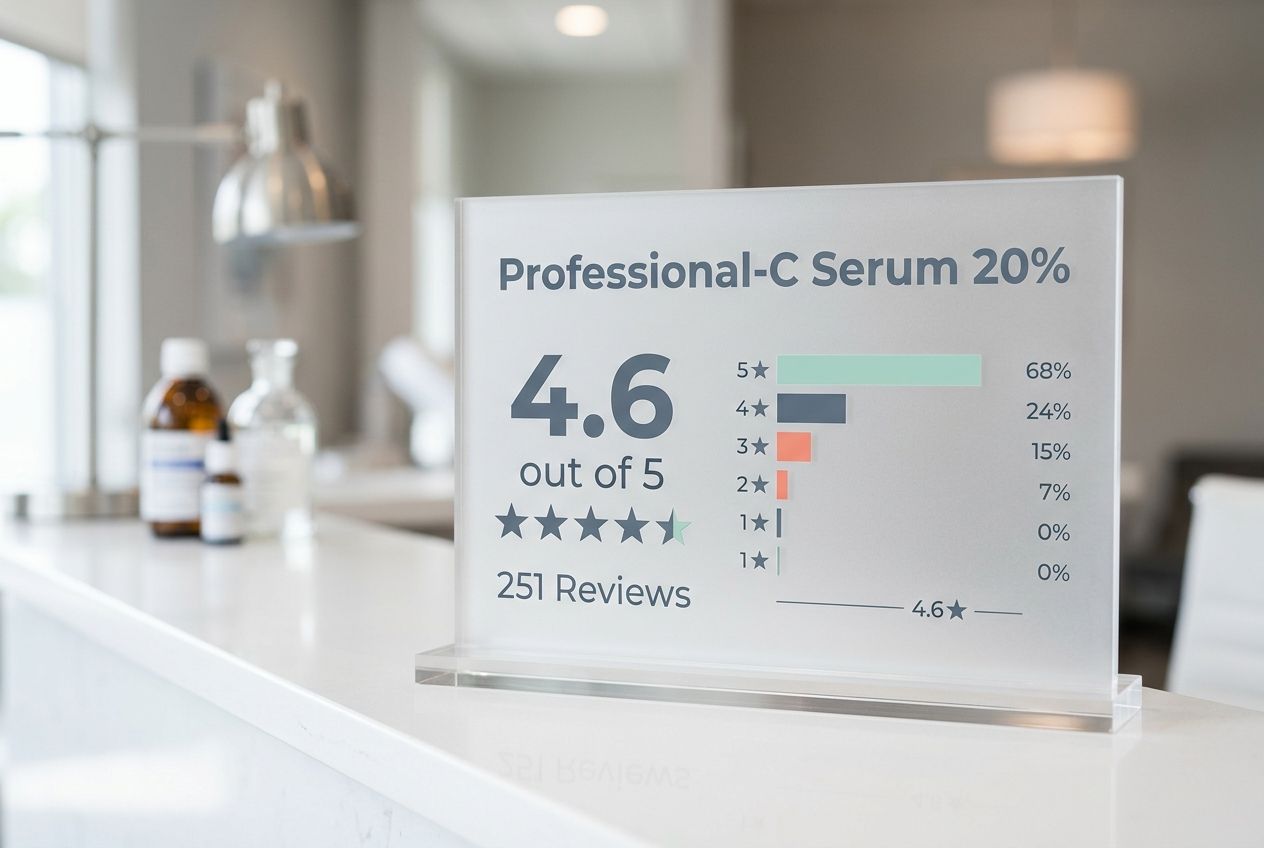
Obagi currently lists a 4.6 out of 5 rating from 251 reviews for Professional-C Serum 20%. People often choose it for its high vitamin C concentration and simple morning placement under sunscreen.
The main trade-off is tolerability. A 20% L-ascorbic acid serum can tingle, especially if you are new to vitamin C or also use glycolic acid, retinol or exfoliating cleansers.
Use fewer drops at first if your skin feels sensitive, then work up to the full amount listed by Obagi. If your goal is scar healing or active melasma control, a dermatologist can help you decide whether a prescription or in-office plan is more appropriate.
Conclusion
Murad Dark Spot Corrector is the better choice if you want the fastest evidence-backed option. Its Rapid Dark Spot Correcting Serum showed visible improvement in the look of dark spots from day 7, and its tranexamic acid, glycolic acid and patented resorcinol technology give it a more direct hyperpigmentation focus.
Obagi Professional-C Serum 20% is still a strong vitamin C option for daily brightness, antioxidant support and uneven skin tone, but it is not a like-for-like rapid dark spot treatment.
Whichever serum you choose, patch test first and use sunscreen every day. The American Academy of Dermatology recommends tinted, broad-spectrum, water-resistant SPF 30 or higher with iron oxides for dark spots, especially where visible light may worsen melanin production.
FAQs
1. Which dark spot corrector works faster, Murad or Obagi?
Many users see visible change with Murad in a few weeks, while Obagi often works faster on deep pigmentation because it uses stronger active ingredients.
2. Do ingredients explain why one works faster than the other?
Yes, active ingredient strength and type drive speed, not the name on the tube. Obagi formulas can include higher strength actives that clear pigment sooner, but they can also raise the risk of irritation.
3. Can people with sensitive skin use these dark spot correctors?
Patch test first; Murad treatments tend to be gentler, Obagi treatments may need clinician guidance.
4. How should I choose the faster, safe option?
Match the product to your skin type and the depth of the spot, and take photos to track progress. If you have deep spots or sensitive skin, consult a dermatologist before using stronger Obagi formulas.