
You know how frustrating age spots can be: you treat them for a few weeks, see little change, and start wondering whether the product or procedure is doing anything at all.
The key distinction is that “dark spots” is a broad label. A flat brown sun spot, post-inflammatory hyperpigmentation after acne, and melasma can look similar, but they respond on very different timelines.
Most surface-level age spots improve over months, not days. This guide explains what affects fading time, which treatment options make sense for each concern, and how to build a skincare routine that protects your progress.
Key Takeaways
- Flat, light-brown age spots, also called solar lentigines or liver spots, often improve over several months with steady sun protection and a well-tolerated topical routine.
- Post-inflammatory hyperpigmentation (PIH) from acne, eczema, or irritation may fade more slowly, especially in melanin-rich skin tones where inflammation can trigger more melanin production.
- Prescription hydroquinone, retinoids, vitamin C, niacinamide, azelaic acid, alpha arbutin, kojic acid, and glycolic acid can help with surface pigment, but each needs consistent use and careful attention to irritation.
- Laser and light-based treatments, cryotherapy, chemical peels, and microdermabrasion can work faster for selected age spots, yet they also carry a greater risk of redness, discoloration, and downtime.
- Daily broad-spectrum SPF 30 or higher is part of every treatment plan. Without sun protection, UV exposure can darken existing spots and create new ones.
- A changing, itchy, bleeding, painful, or unusual spot needs a dermatologist's assessment before any fading treatment. What looks like an age spot can sometimes be skin cancer.
Factors That Affect How Fast Age Spots Fade
The timeline for fading depends less on the number of products you use and more on the type of pigment you are treating. Depth, sun exposure, skin type, inflammation, and consistency all shape the result.
Age spots usually form after years of UV radiation exposure. PIH and melasma involve different triggers, so copying a routine made for sun spots may leave you irritated without solving the problem.
Depth of Pigmentation
Most classic liver spots sit near the base of the epidermis, your outer skin layer. They tend to look tan to medium brown with defined edges and often appear on the face, chest, shoulders, forearms, and backs of the hands.
Topical fade creams can gradually improve epidermal pigment because they act where the excess melanin is concentrated. Mayo Clinic notes that treatments for age spots must reach this upper skin layer, which is why a daily routine needs time to show visible change.
Dark spots that look blue-gray, spread in patches, or return after every summer often need a more specific diagnosis than “age spots.”
Deeper pigment is harder to treat with over-the-counter skincare products alone. Melasma often appears as broader, symmetrical patches on the cheeks, forehead, upper lip, or jawline, while PIH follows a pimple, rash, injury, or procedure.
Do not assume a stubborn spot simply needs a stronger acid. A dermatologist can examine suspicious pigment and, if needed, perform a skin biopsy to distinguish an age spot from conditions such as lentigo maligna, a type of skin cancer.
Consistency of Treatment
Topical treatments work through repeated use. Expect to apply a well-tolerated serum, retinoid, or prescription cream for weeks to months before you decide whether it is helping.
The American Academy of Dermatology explains that creams and lotions require once- or twice-daily use for weeks or months, while in-office procedures can work faster. That makes consistency your advantage if you prefer the lower-cost, lower-downtime route.
- Use one primary dark spot treatment at a time. Starting vitamin C, retinol, glycolic acid, kojic acid, and a chemical peel together raises the chance of irritation.
- Take photos monthly. Use the same window, angle, and lighting so you can spot real change rather than day-to-day variation.
- Apply sunscreen every morning. This prevents UV exposure from darkening the pigment you are trying to fade.
- Pause if your skin burns or peels heavily. Irritation can worsen post-inflammatory hyperpigmentation, especially in deeper skin tones.
A simple routine often performs better than a crowded shelf of skincare products. In the morning, use vitamin C or niacinamide if your skin tolerates it, followed by moisturizer and sunscreen. At night, use a retinoid or dark spot corrector on a schedule your skin can handle.
Hyaluronic acid and centella asiatica can support comfort by adding hydration and reducing the tight, dry feeling that makes people quit treatment too soon. They do not fade pigment on their own, but they can make an active routine easier to maintain.
Skin Type and Sensitivity
Your skin type changes both the treatment plan and the risk of side effects. People with melanin-rich skin are more likely to develop noticeable PIH after acne, eczema, burns, shaving irritation, or overly aggressive procedures.
A 2024 systematic review of PIH in skin of color found that topical retinoids and laser therapy were common treatment options, but it also documented cases where laser treatment worsened pigmentation. The practical takeaway is clear: choose a clinician experienced with your skin tone before using strong peels, microneedling, or laser therapy.
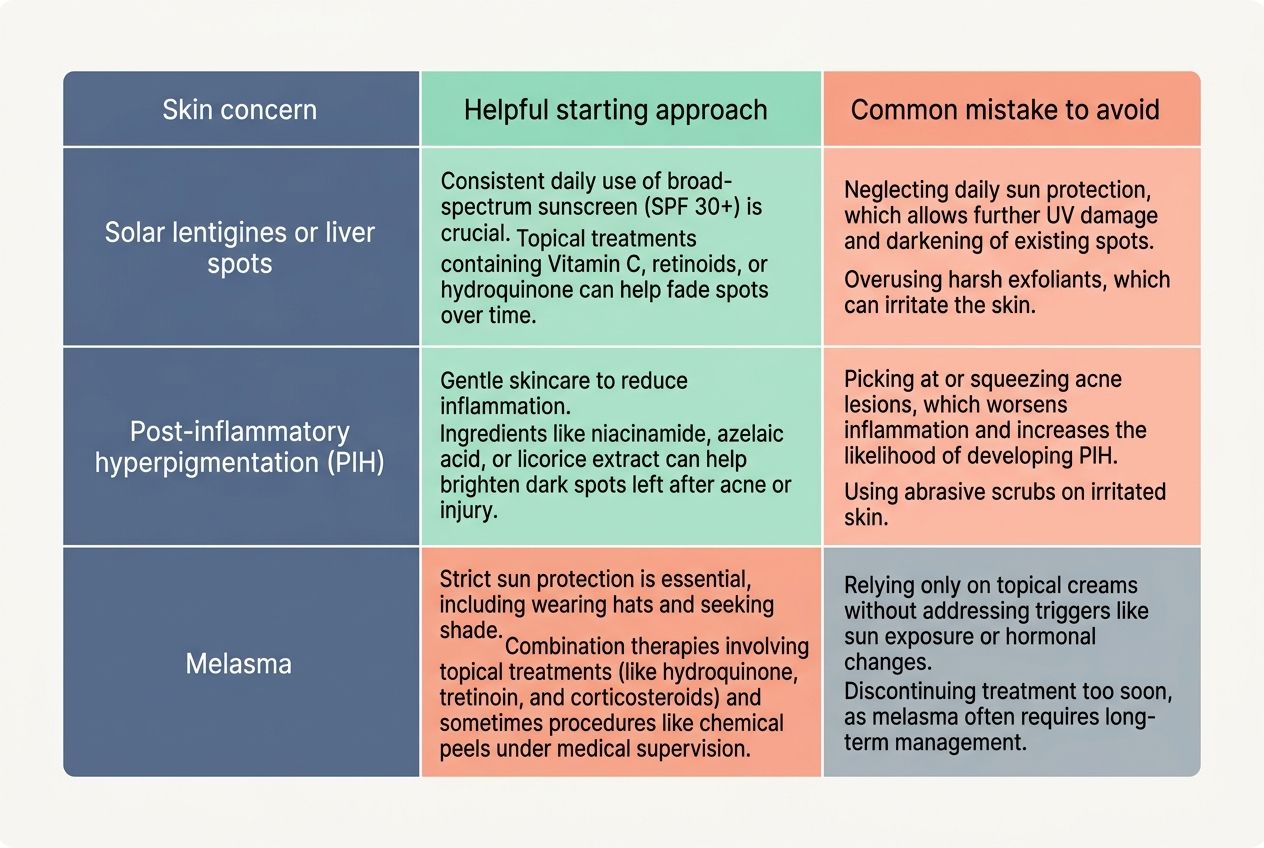
| Skin concern | Helpful starting approach | Common mistake to avoid |
|---|---|---|
| Solar lentigines or liver spots | Daily sun protection, vitamin C, retinoids, or a clinician-guided procedure | Expecting a large, long-standing spot to disappear in two weeks |
| Post-inflammatory hyperpigmentation | Control acne, eczema, or irritation first, then add a gentle pigment treatment | Scrubbing, picking, or overusing acids |
| Melasma | Tinted sunscreen with iron oxides, gentle skincare, and dermatologist-guided treatment | Using heat, sun exposure, or irritating products while trying to fade patches |
For melasma and PIH, a tinted mineral sunscreen can be especially useful. The American Academy of Dermatology recommends a tinted SPF 30 or higher with iron oxides for melasma because visible light can worsen dark patches, particularly in darker skin tones.
Treatment Options for Age Spots
The best treatment options depend on whether you want gradual at-home fading or faster in-office results. Your provider may combine both approaches, but more treatment is not always better.
Choose a plan that you can use consistently without stinging, peeling, or causing new discoloration. A calm skin barrier gives pigment treatments a better chance to work.
Topical Creams for Dark Spots
Topical treatments are usually the first step for mild age spots, sun spots, and post-inflammatory hyperpigmentation. They can reduce melanin production, speed the shedding of pigmented surface cells, or both.
- Vitamin C: An antioxidant that can support a brighter, more even look. Use it in the morning under sunscreen if the formula does not sting.
- Niacinamide: A gentle option that can help uneven tone while supporting the skin barrier. It is a useful choice for sensitive skin.
- Retinoids: Retinol, adapalene, and prescription tretinoin increase skin cell turnover. Start slowly because dryness and irritation can trigger PIH.
- Azelaic acid: Often used for acne, rosacea, and uneven pigment. It can be a practical option if you need a treatment that also addresses breakouts.
- Alpha arbutin, kojic acid, and glycolic acid: These can support fading, but they are more likely to irritate skin when layered carelessly with other actives.
Hydroquinone deserves extra caution in the United States. The FDA states that over-the-counter skin-lightening products containing hydroquinone are not approved for sale, and prescription hydroquinone should be used under a licensed clinician's supervision.
Prescription combinations may pair hydroquinone with tretinoin and a mild corticosteroid for short-term treatment of facial melasma. This approach can be effective, but it is not a casual long-term skincare product, and you should contact your prescriber if you develop redness, swelling, burning, or blue-black discoloration.
Do not use several strong exfoliants in the same routine just to speed up results. A dark spot corrector such as a niacinamide or vitamin C serum may be enough for a beginner, especially if you are also starting retinol.
Laser and Light-Based Treatments
Laser and light-based treatments target pigment more directly than topical skincare products. Some lasers and intense pulsed light, commonly called IPL, break down pigment or target melanin-producing cells while leaving much of the skin surface intact.
Mayo Clinic lists laser and IPL among the treatment options for age spots and notes that these approaches commonly require two to three sessions. Your clinician will choose the device based on the spot's depth, your skin tone, your medical history, and your risk of PIH.
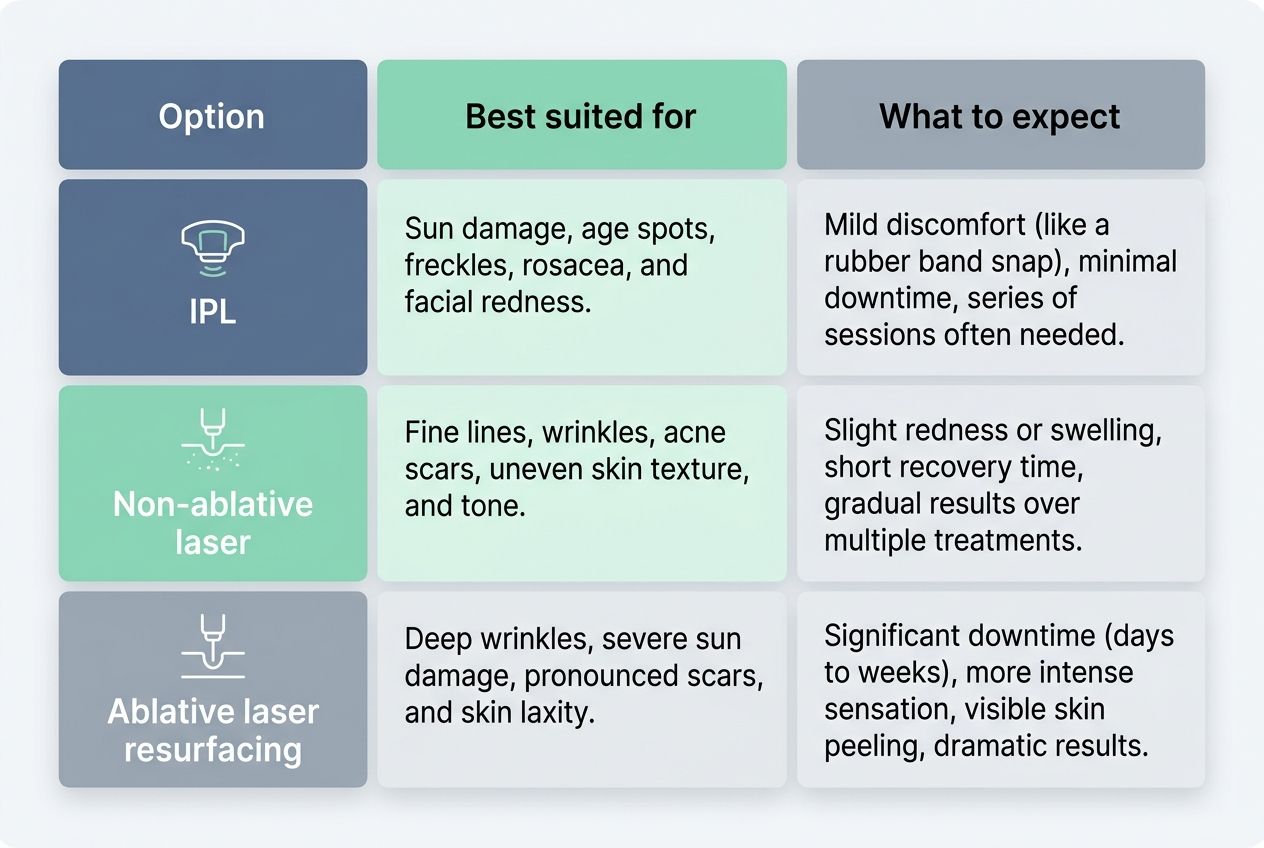
| Option | Best suited for | What to expect |
|---|---|---|
| IPL | Scattered, superficial brown sun spots | Often a series of treatments, followed by temporary darkening or flaking of treated pigment |
| Non-ablative laser | Selected pigment concerns with limited downtime | Gradual improvement with follow-up care and strict sun protection |
| Ablative laser resurfacing | Broader sun damage or texture concerns selected by a clinician | More downtime and a higher need for careful aftercare |
Laser treatment is not automatically the fastest or safest choice for every dark spot. If you have melasma, recent PIH, a history of keloids, active acne, or a deeper skin tone, ask exactly how your provider will reduce the risk of rebound pigmentation.
Microneedling may help certain acne-scar and pigment concerns when performed by an experienced clinician, but it creates controlled injury in the skin. If your skin tends to leave dark marks after irritation, get a personalized plan before booking treatment.
Chemical Peels
A chemical peel uses a solution to remove part of the outer skin layer. As new skin forms, mild surface discoloration can look more even.
Superficial chemical peels may use acids such as glycolic acid, lactic acid, or salicylic acid. Stronger peels reach deeper and require more recovery, so they should be selected and performed by a qualified clinician.
The American Academy of Dermatology reports that, in one comparison study for age spots, 47% of patients receiving a chemical peel achieved at least 50% fading. That makes a peel a reasonable discussion point for clear age spots on the hands, but it is not a shortcut for every type of hyperpigmentation.
- Stop using retinoids, exfoliating acids, and scrubs before a peel if your clinician instructs you to do so.
- Do not pick peeling skin, since injury can create new PIH.
- Use bland moisturizer and broad-spectrum sun protection during healing.
- Seek care promptly for severe swelling, blistering, increasing pain, drainage, or signs of infection.
Dermaplaning removes fine facial hair and surface dead skin with a sterile blade. It can make skin feel smoother, but it does not treat deep pigment, and it should not replace a plan for melasma, PIH, or true solar lentigines.
Microdermabrasion and Cryotherapy
Microdermabrasion uses a diamond-tipped wand or fine crystals to gently exfoliate the outer skin layer. It can make mild blemishes look smoother, but the improvement in age spots is usually modest and temporary without a series of visits.
Mayo Clinic cautions that microdermabrasion can worsen rosacea and tiny facial blood vessels. If you flush easily or have eczema, ask about gentler options before adding mechanical exfoliation to your routine.
Cryotherapy, also called cryosurgery, freezes a spot with liquid nitrogen. It is commonly used for individual, well-defined age spots, and the treated area may blister, swell, or temporarily change color as it heals.
For the right isolated liver spot, cryotherapy can be quick. Its main drawback is precision: freezing can leave lighter or darker skin, so it needs careful use, especially on deeper skin tones.
Expected Timeline for Results
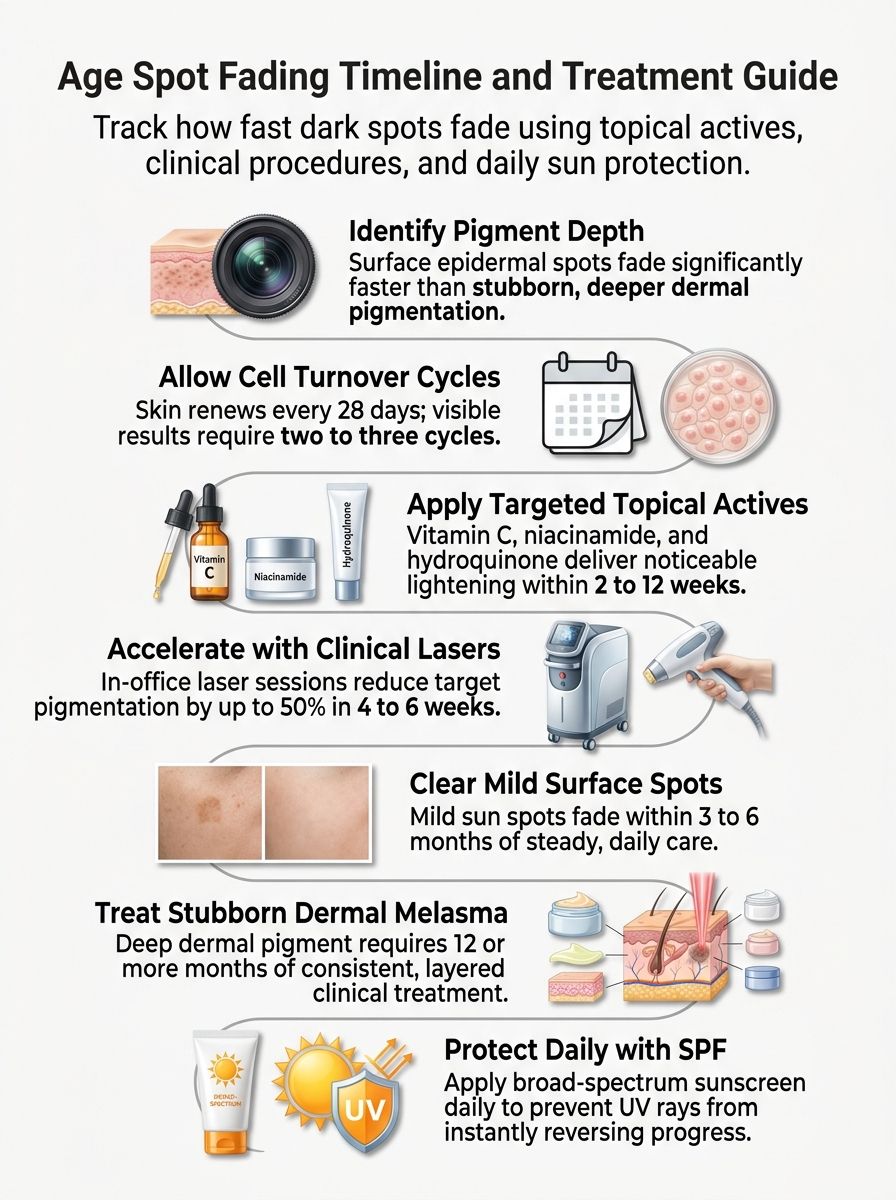
For most people, the realistic answer is this: mild age spots may show gradual improvement in three to six months, while melasma, deep pigment, and recurring PIH can take much longer.
Progress should look like slow softening at the edges, less contrast against surrounding skin, and fewer new dark spots. A product that promises overnight removal is not setting a realistic expectation.
Mild Cases: About 3 to 6 Months
Surface sun spots and recent post-acne marks often respond best to daily sun protection plus one or two consistent topical treatments. You may notice early brightness within several weeks, but visible spot fading usually requires more time.
A practical routine for mild dark spots can look like this:
- Apply vitamin C or niacinamide in the morning.
- Use broad-spectrum SPF 30 or higher every day, and reapply during extended time outdoors.
- Use retinol or another retinoid at night two to three times weekly at first.
- Increase frequency only if your skin stays comfortable.
- Review monthly photos after 12 weeks before changing the plan.
If your skin reacts, scale back instead of pushing through. A gentler routine that you use for four months is more useful than a harsh routine you abandon after two weeks.
Severe Cases: Up to 12 Months or More
Severe hyperpigmentation, deep melasma, and long-standing dermal pigment may need six to 12 months or longer. These concerns often improve in stages rather than disappearing all at once.
In-office care can shorten the visible timeline for selected solar lentigines, but it still requires aftercare and sun protection. One or two laser treatments may treat age spots quickly, according to the American Academy of Dermatology, while stubborn pigment may need repeat sessions or a combined topical plan.
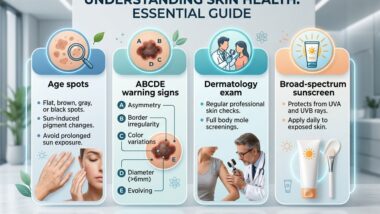
See a board-certified dermatologist sooner if dark spots spread, become raised, change shape or color, itch, bleed, hurt, or do not respond after several months of consistent care. The ABCDE warning signs for melanoma include asymmetry, irregular borders, multiple colors, a changing appearance, and spots that stand out from the rest.
Conclusion
Most age spots can fade, but the right timeline depends on whether you are treating solar lentigines, post-inflammatory hyperpigmentation, or melasma. Mild surface spots often improve over three to six months with vitamin C, niacinamide, retinoids, and reliable sun protection.
Deeper or stubborn dark spots may need prescription treatment, chemical peels, cryotherapy, or laser and light-based treatments, and can take a year or more. Protect your skin every day, avoid irritation, and have unusual spots checked before trying to fade them.
FAQs
1. How long does it take for age spots to fade with treatment?
Most age spots, a form of hyperpigmentation, begin to fade in four to twelve weeks with regular treatment. Full fading can take several months, and results vary by skin type, treatment, and sun exposure.
2. Which treatments work fastest?
Light therapy and peel treatments often show faster results than creams, sometimes within weeks. Topical skin lighteners and strict sun protection help, but they usually act slower.
3. Can creams alone remove age spots?
Creams can lighten spots, but they usually take months and work best with sunscreen and follow-up care.
4. Will age spots come back after treatment?
They can return without sun protection and ongoing maintenance. Use sunscreen daily and consider periodic touch-ups to keep spots away. Talk with a dermatologist to pick the right plan for your skin and to set realistic timelines.